PIN address of the Magento 2 OpenStreet card adds an OpenStreetMap based location picker to Magento payment address forms.
Customers can select a specific shipping or billing location by dragging a pin on the map or using the Current location button.
This extension stores the latitude and longitude of customer and order addresses and displays them in customer and admin order details.
- Add an OpenStreetMap PIN selector to the payment shipping and billing address form.
- Allow customers to use current location for address selection.
- Allow customers to drag the map marker to select a specific address.
- Automatically fill address fields using reverse geocoding.
- Supports OpenStreetMap without requiring API key configuration.
- To safeguard Latitude And Longitude with the customer’s address data.
- Show saved latitude and longitude in admin command view.
- Supports GraphQL address fields for latitude and longitude.
- Reduce incorrect or incomplete shipping address information.
Installation download module
First of all, you need to log in to the Webkul Store, go to My account>My purchased products section, check, then download and extract the contents of this zip folder to the system.
Download the file
Once the module zip is extracted, follow the path src>application then copy it application folder in the Magento 2 Root directory on the server as shown below:
Execute commands
You need to run the following commands:
php bin/magento setup:upgrade
php bin/magento setup:di:compile
php bin/magento setup:static-content:deploy
php bin/magento indexer:reindex
php bin/magento cache:flush
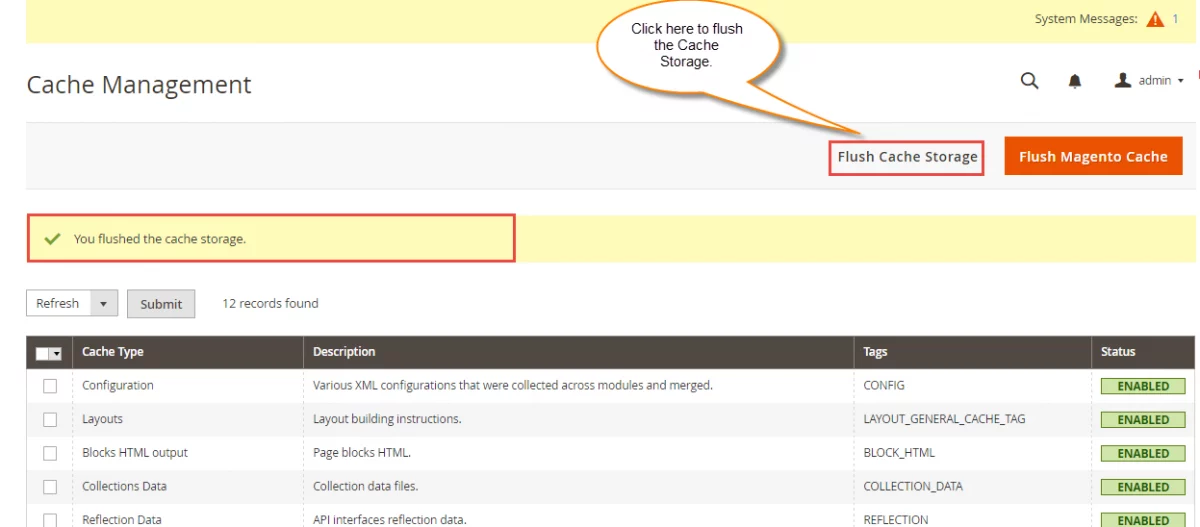
After running the commands, you need to clear the Adobe Commerce Cloud admin panel cache by navigating through->System->Cache management as shown below.
Adobe Commerce multilingual setup
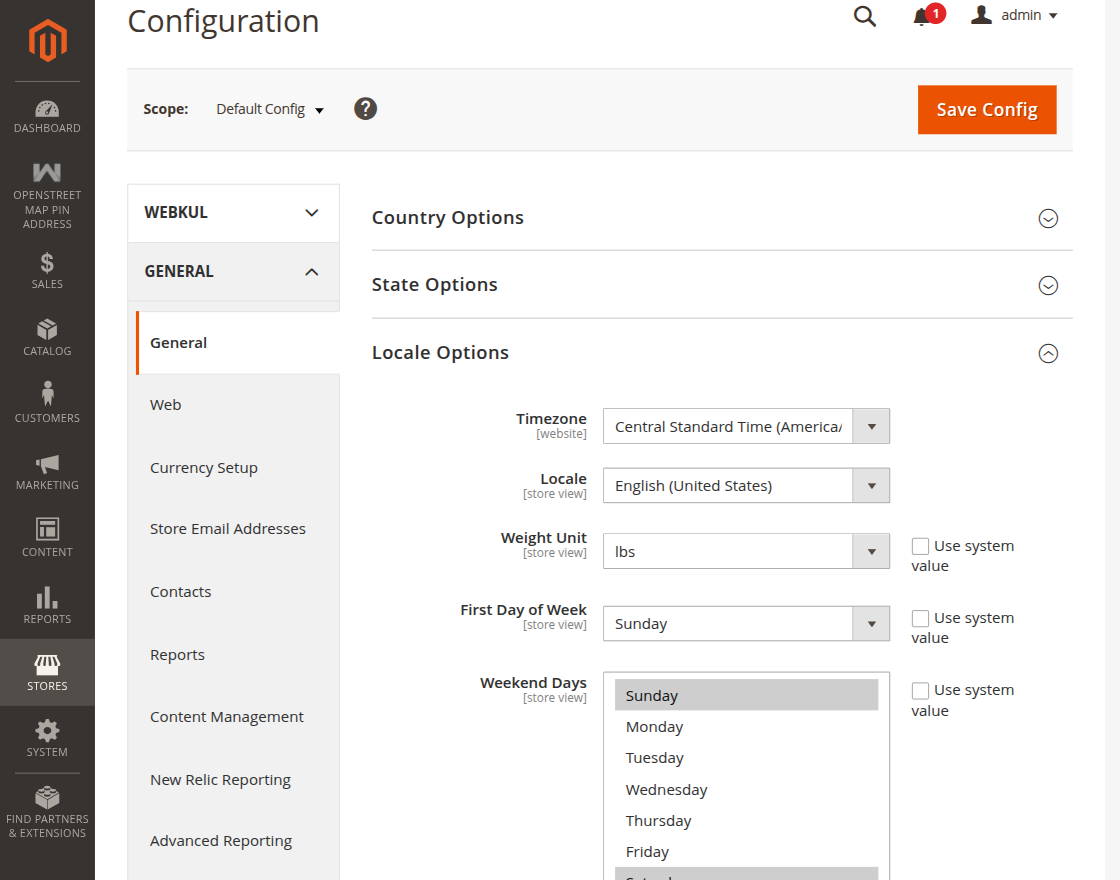
Go to Stores > Configuration > General > General > Locale options and select the required locale from the Regional Settings drop-down list. Click Save Configuration to apply the changes, then clear the Magento cache.
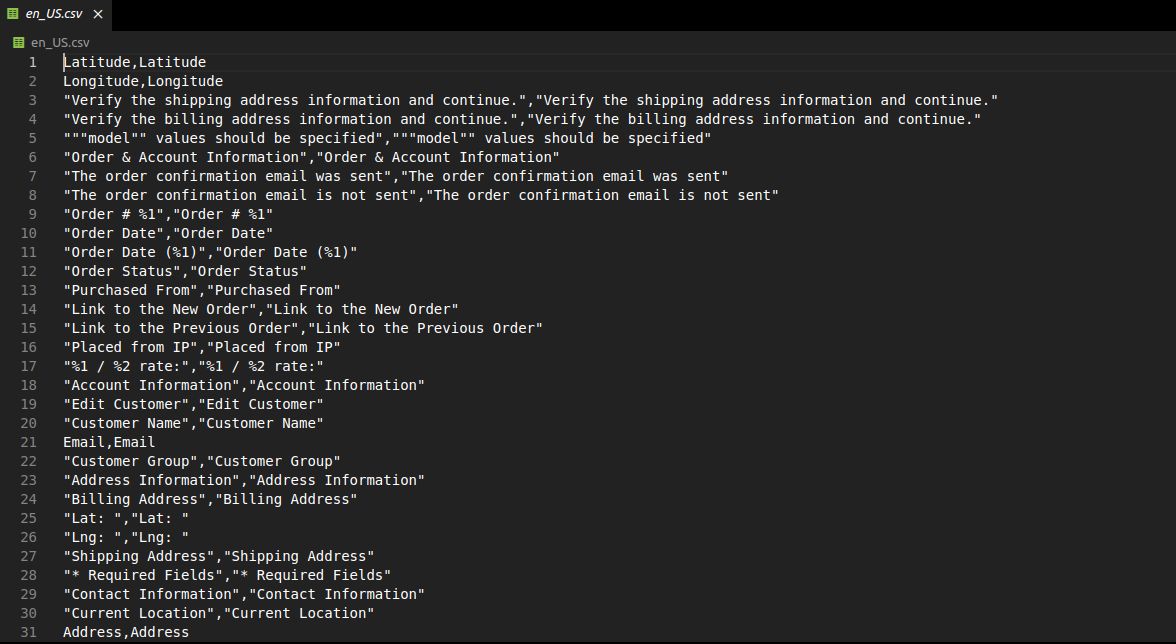
The translation file is available at: app/code/Webkul/OpenStreetMapPinAddress/i18n/en_US.csv
Copy it en_US.csv file and rename it according to the target locale, such as fr_FR.csv, de_DE.csvOr es_ES.csv.
Translate only the values in the second column, then upload the translated CSV file to app/code/Webkul/OpenStreetMapPinAddress/i18n.
After saving the translation file, clear the Magento cache to apply the changes.
Administrator configuration of the PIN address of the Magento 2 OpenStreet card
To configure the module, go to Stores > Configuration > Webkul > OpenStreet Map PIN address settings.
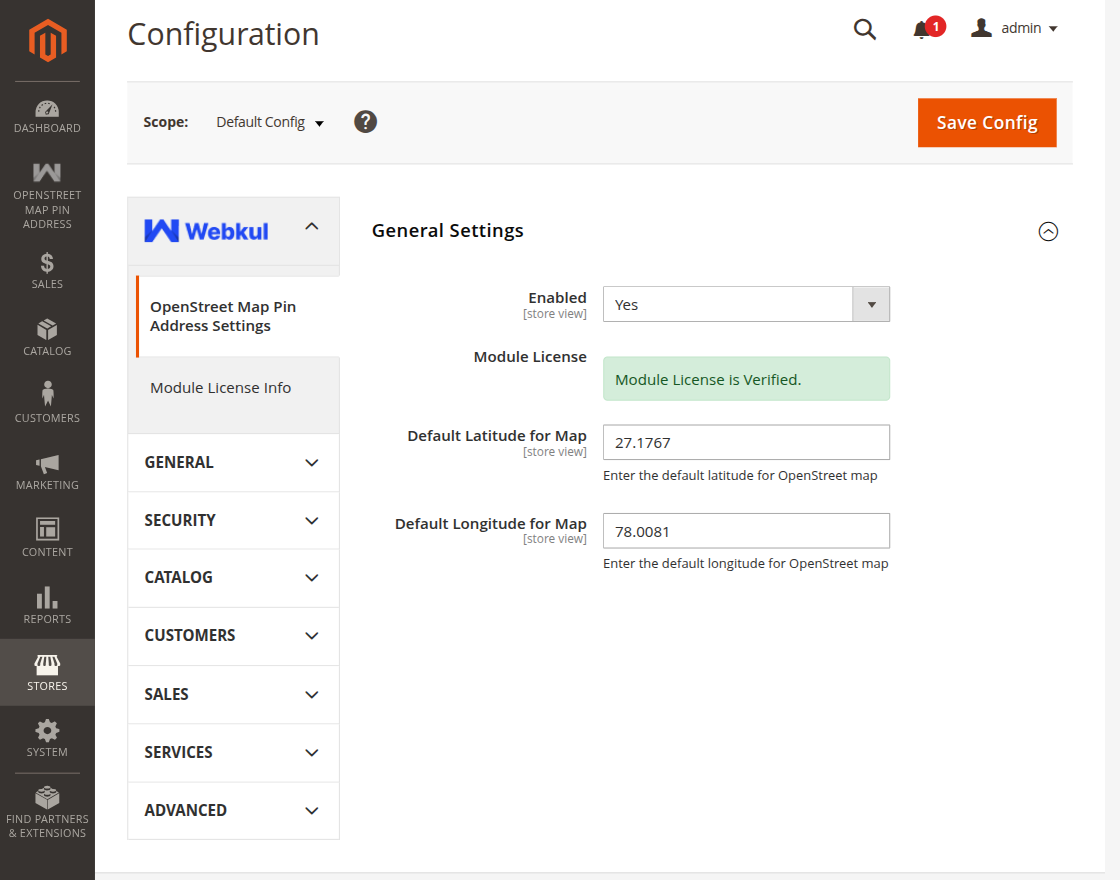
- Enabled: Select Yes to enable the OpenStreetMap PIN address feature during checkout in store. Select No to deactivate it.
- Default latitude for the map: Enter the default latitude used when the map loads without existing customer coordinates.
- Default longitude for the map: Enter the default longitude used when the map loads without existing customer coordinates.
After updating the configuration, click Save configuration and clear the Magento cache.
Customers can add a product to the cart and proceed to checkout. On the delivery address form, they can enter the address manually or use the map pin to select the delivery location.
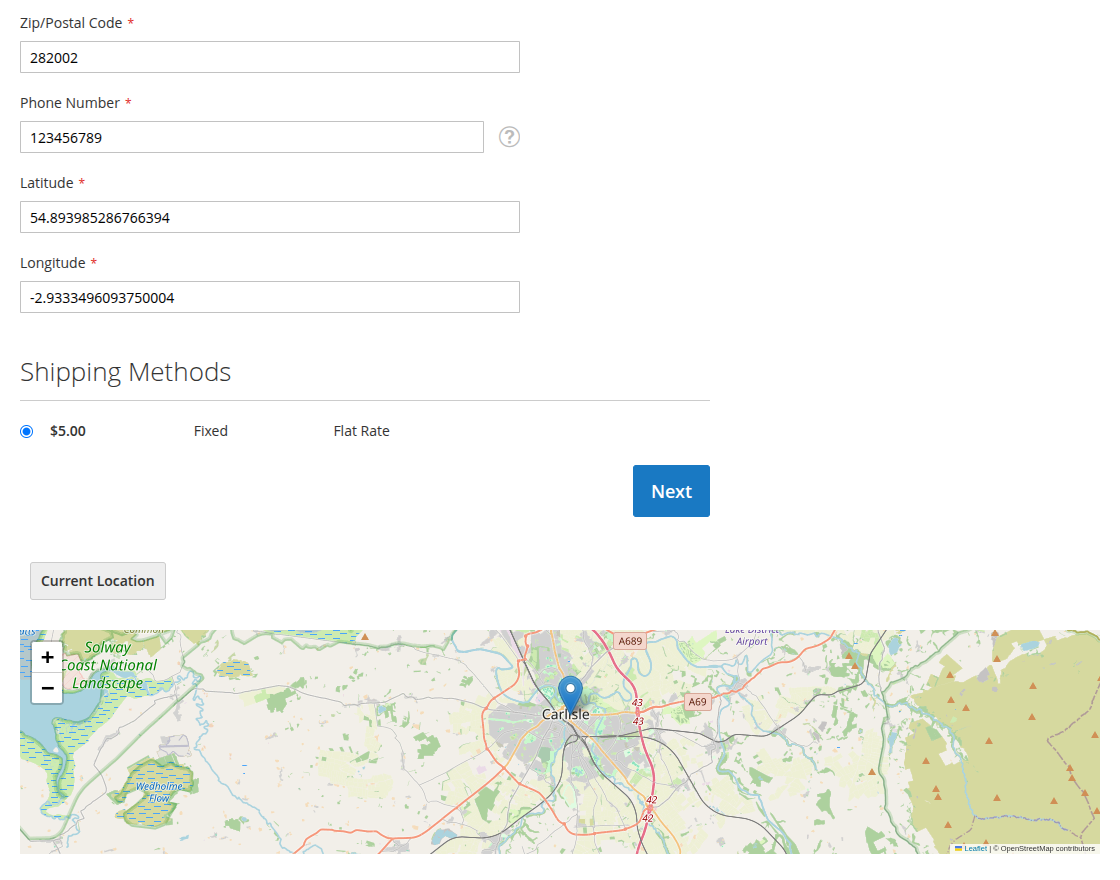
If necessary, they can click Current location To use the browser location, drag the map marker to adjust the delivery address and verify that the latitude and longitude values are updated automatically.
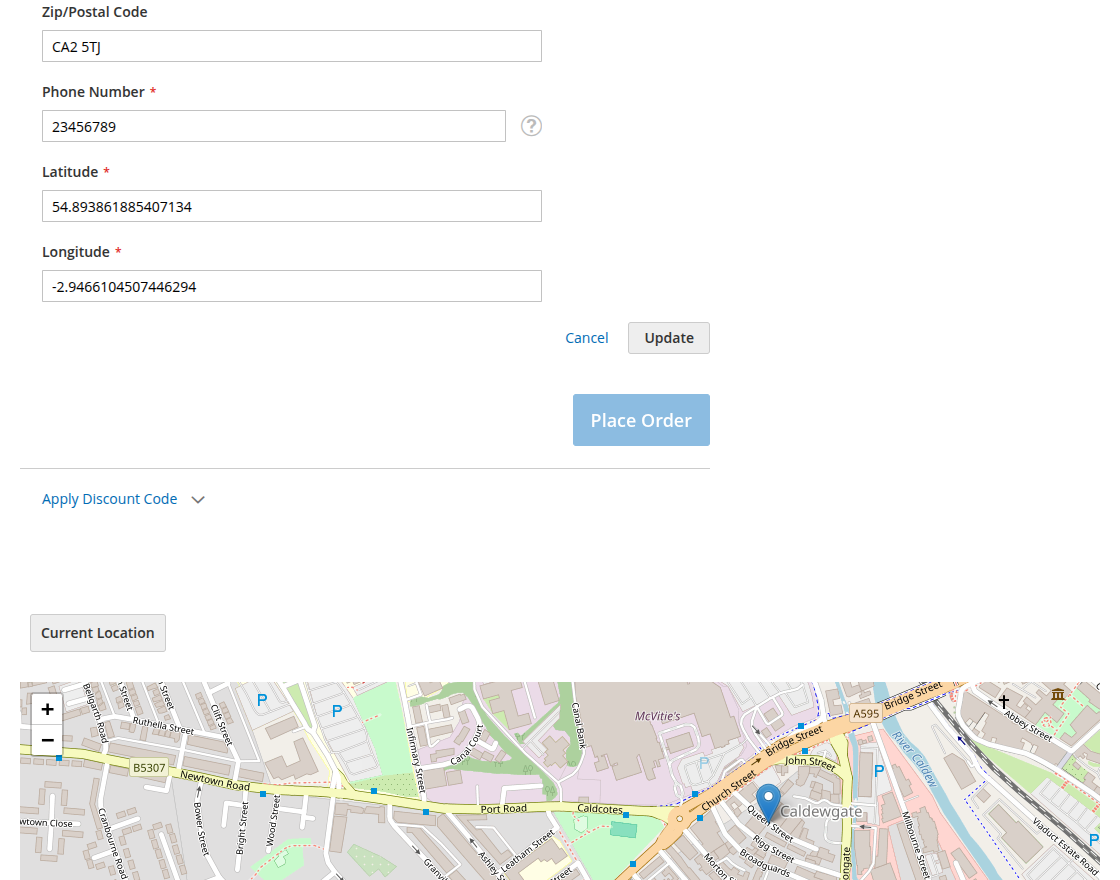
After selecting the shipping method, they can proceed to the payment step. If the billing address is different, they can update the billing location using the map pin before placing the order.
Finally, they can open the order details in their customer account and check the latitude and longitude values saved for the shipping and billing addresses.
The customer can also change/add the address from their address book using the card as well.
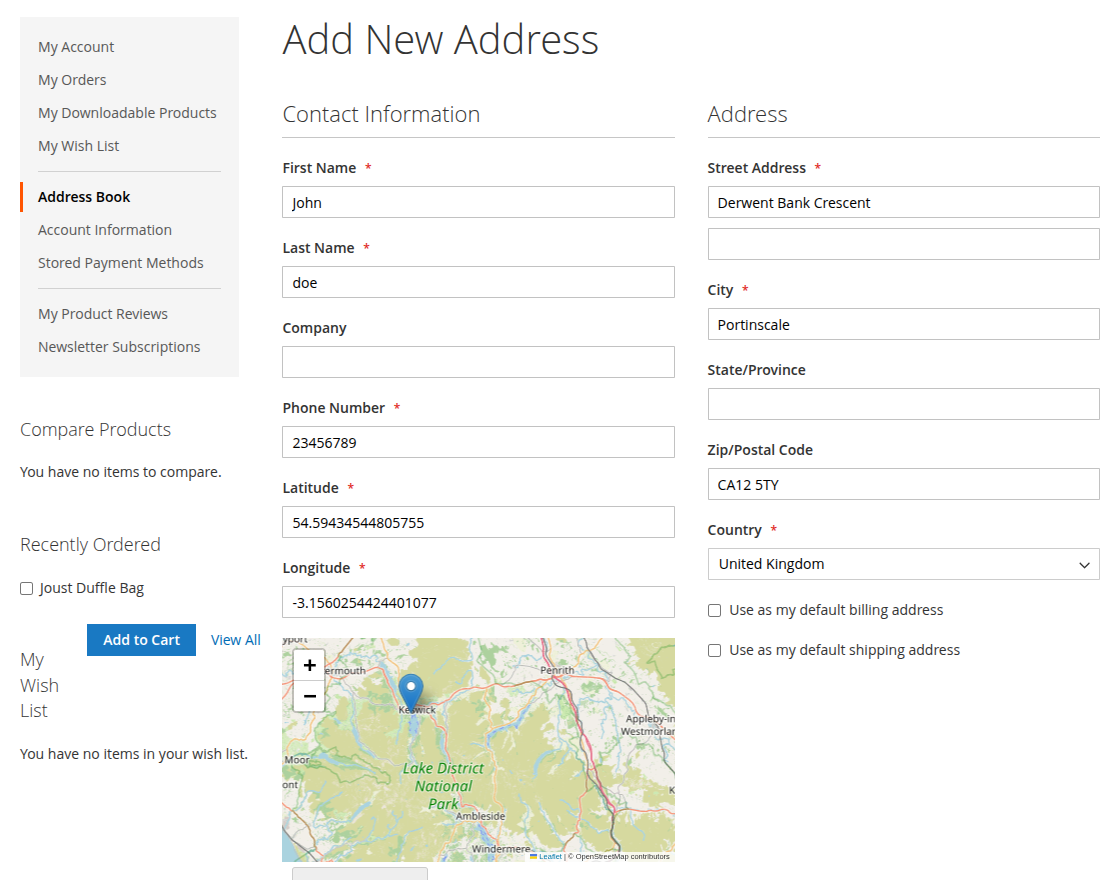
To update/add address by which customer can navigate My account > Address book.
The administrator can access Sales > Orders and open the required command. See Order and Account Information.
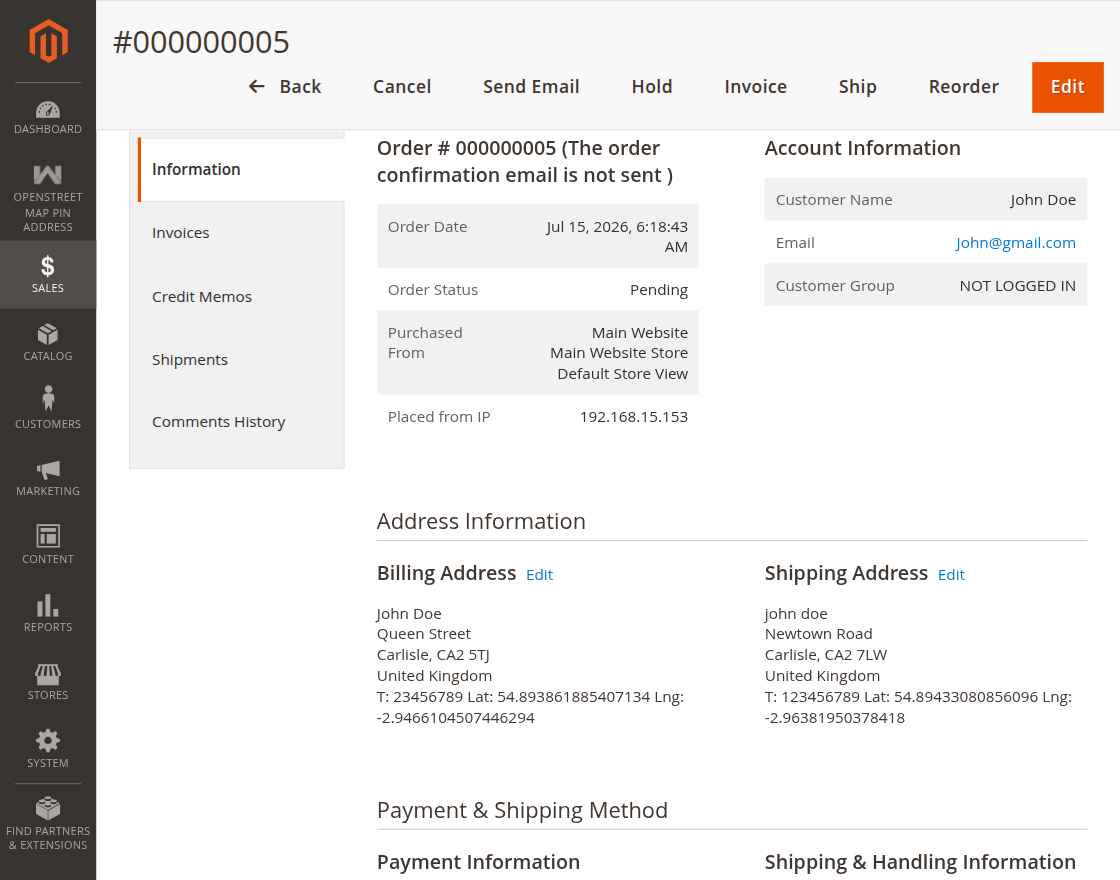
Next, check the Shipping Address and Billing Address blocks. Check the latitude and longitude values saved for the command.
Support
It’s all about the Razorpay Magic Checkout module of Magento 2. In this case, if you have any issues or concerns, please email us at [email protected].
Our team will be happy to help you. Additionally, we will provide the necessary support.
You can also browse Magento 2 extensions
Current product version – 4.0.0
Supported framework version – Magento 2.0.x, 2.1.x, 2.2.x, 2.3.x, 2.4.x

PakarPBN
A Private Blog Network (PBN) is a collection of websites that are controlled by a single individual or organization and used primarily to build backlinks to a “money site” in order to influence its ranking in search engines such as Google. The core idea behind a PBN is based on the importance of backlinks in Google’s ranking algorithm. Since Google views backlinks as signals of authority and trust, some website owners attempt to artificially create these signals through a controlled network of sites.
In a typical PBN setup, the owner acquires expired or aged domains that already have existing authority, backlinks, and history. These domains are rebuilt with new content and hosted separately, often using different IP addresses, hosting providers, themes, and ownership details to make them appear unrelated. Within the content published on these sites, links are strategically placed that point to the main website the owner wants to rank higher. By doing this, the owner attempts to pass link equity (also known as “link juice”) from the PBN sites to the target website.
The purpose of a PBN is to give the impression that the target website is naturally earning links from multiple independent sources. If done effectively, this can temporarily improve keyword rankings, increase organic visibility, and drive more traffic from search results.
Comments are closed, but trackbacks and pingbacks are open.